

People describe sciatica in all kinds of ways. “Like an electric shock down my leg.” “A toothache in my butt.” “Burning down the back of my thigh every time I sit in the car.” However you’d put it, if you’ve had it, you know it’s not the same as a regular sore back.
It’s one of the most common things we help people with, so here’s what’s actually going on, what you can do about it today, and when it’s time to get it looked at.
Sciatica isn’t really a diagnosis
The sciatic nerve is the biggest nerve in your body. It starts as several nerve roots in your low back, runs through your buttock and travels down the back of each leg. “Sciatica” just means something is irritating that nerve, and the pain follows its path.
The question is what’s irritating it. Sometimes it’s a bulging or herniated disc in the low back. Sometimes it’s stiff, irritated joints in the low back or pelvis. As we get older, the spaces the nerves pass through can narrow. And sometimes it’s a tight muscle deep in the buttock squeezing the nerve. Each of those calls for a slightly different approach, which is why figuring out the cause matters so much.
How to tell it apart from regular back pain
A regular sore back usually stays in your back. It feels achy or stiff and often loosens up once you get moving. Sciatica tends to travel. The pain goes below the knee, sometimes all the way to the foot. It feels sharp, burning or electric rather than dull. You might notice numbness or pins and needles, it’s usually on one side, and sitting, coughing or sneezing can make the leg pain spike.
Plenty of people have both at once, a sore low back and pain down the leg. That’s normal too, and a good exam sorts out which is which.
What helps in the meantime
Keep moving gently. Short, easy walks almost always beat lying in bed. If you sit a lot, get up every 20 or 30 minutes, especially on long drives. Ice or heat can take the edge off, so use whichever feels better. A pillow between your knees when you sleep on your side, or under your knees on your back, helps a lot of people get through the night.
One thing to skip: cranking on a hamstring stretch. When the nerve is already irritated, aggressive stretching can make it angrier.
When to go to the ER
Most sciatica isn’t an emergency, but some symptoms are. Losing control of your bladder or bowels, numbness in the groin or inner thighs, leg weakness that’s getting worse quickly, or back and leg pain with a fever or after a bad fall all need emergency care right away.
How we help with sciatica
We start by finding out what’s irritating the nerve. That means a real conversation about your symptoms and a thorough exam, with X-rays when they’re needed. If you already have an MRI, bring it in and one of our doctors will go over it with you at no charge.
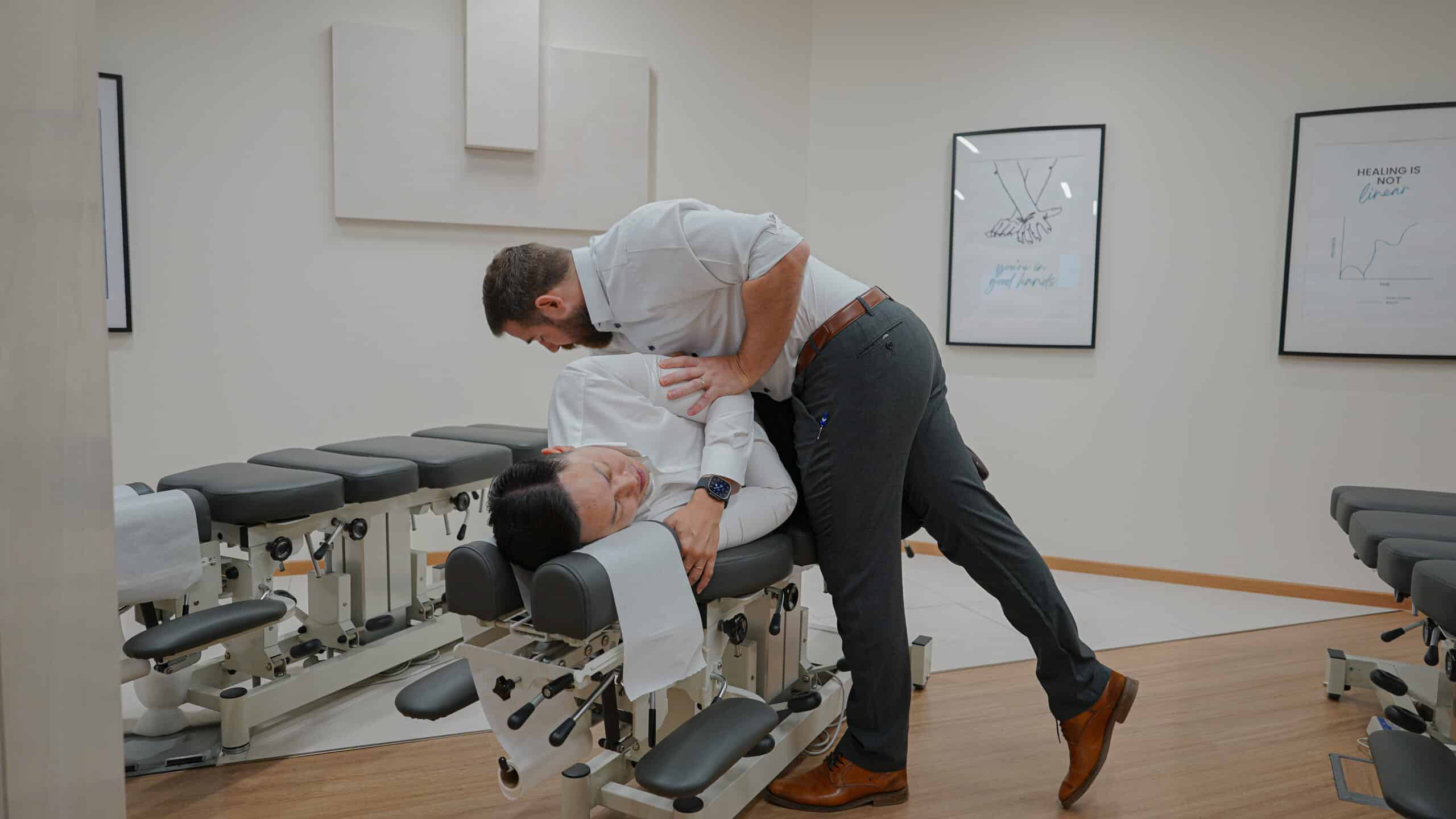
From there, your sciatica pain relief plan is built around what we find. That might mean gentle adjustments to get the low back and pelvis moving, massage for tight muscles, corrective therapy to build strength and stability, or non-surgical spinal decompression if a disc is the main problem. Many of our sciatica patients tell us the leg pain is the first thing to ease up, and that’s usually a good sign.
If sciatica has been hanging around for weeks or keeps coming back, don’t just wait it out. We’re right off Eagle Road at Wainwright, on the Meridian and West Boise line. You don’t need a referral, and we take most insurance. Schedule your first visit or give us a call at (208) 939-0775.