

Hearing the words “herniated disc” can be scary, especially if the pain is running down your leg or arm and nothing you’ve tried has touched it. A lot of people walk into our office wondering if surgery is the only thing left.
For some people, surgery is the right call. But for many others, there are good options to try first. Non-surgical spinal decompression is one of them, and it’s a big part of what we do here.
What’s actually happening with a disc
Between each pair of vertebrae is a disc, kind of like a jelly donut. It has a tough outer ring and a softer center, and it works as a cushion. Over time, with wear, an injury or years of repetitive strain, that outer ring can weaken. The disc bulges, or the soft center pushes through. If that happens near a nerve root, you get pain, numbness or tingling that travels into your leg if it’s in the low back, or into your arm if it’s in the neck.
How decompression works
Decompression uses a specialized table to gently stretch your spine in a slow, controlled rhythm of pulling and relaxing. The goal is to take pressure off the disc and the nerves around it. You lie comfortably on the table while it does the work. Most people find it surprisingly relaxing.
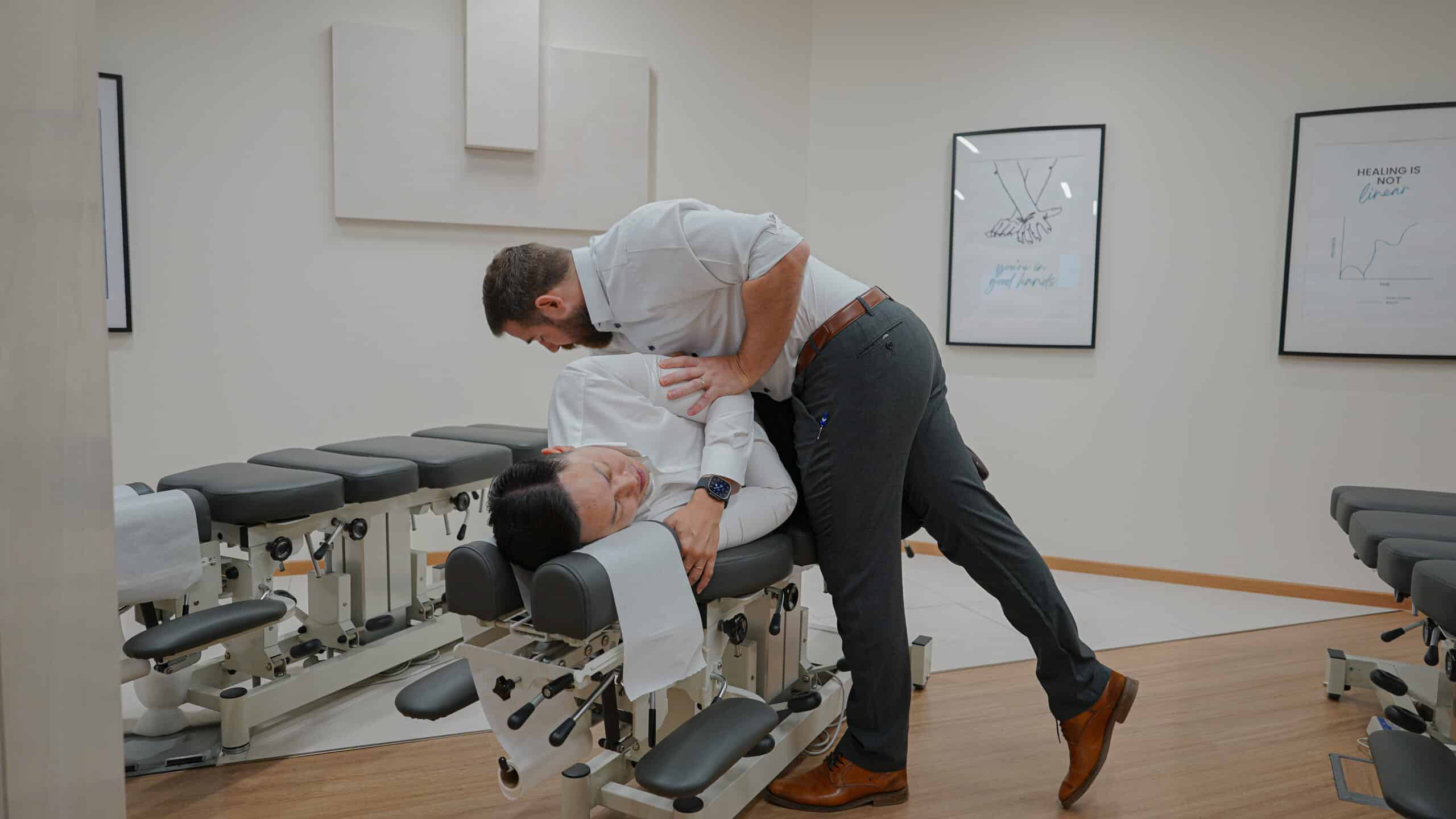
It works best as part of a bigger plan. We usually pair it with adjustments, corrective therapy to strengthen the muscles that support your spine, and a few simple changes at home so you’re not undoing the progress between visits.
Is it right for you?
Decompression tends to be a good fit for people with a bulging or herniated disc in the low back or neck, sciatica or arm pain from an irritated nerve, or back and neck pain that hasn’t gotten better with other conservative care. It’s also a good option for anyone who wants to try everything non-surgical before considering an operation.
It isn’t for everyone, though. It’s generally not used during pregnancy, after certain spinal surgeries or implants, or for people with fractures, tumors or advanced osteoporosis. That’s why we always start with a thorough exam.
Bring your MRI
If you already have an MRI, bring it with you. One of our doctors will go over it with you at no charge, explain what it actually shows in plain English, and tell you honestly whether decompression makes sense for you. No pressure either way. You’ll just know your options.
And if you ever lose control of your bladder or bowels, notice numbness in the groin, or have weakness in a leg or arm that’s getting worse quickly, go to the emergency room.
You can read more about our non-surgical spinal decompression and how we approach back pain treatment and sciatica.
If you’ve been told you have a bulging or herniated disc, let’s talk about your options. We’re right off Eagle Road at Wainwright, on the Meridian and West Boise line. You don’t need a referral, and we take most insurance. Schedule your first visit or give us a call at (208) 939-0775.