

If you live in the Treasure Valley, you probably don’t sit still much. Pickleball after work, a Saturday half marathon, a ski day at Bogus, a rec league that gets a little more competitive than anyone admits. We love it. We also see what happens when a tweak turns into something that just won’t go away.
So how do you know when it’s time to stop toughing it out and get it looked at? Here’s how we think about it.
“It should be better by now”
Most bumps and strains settle down in a few days. You’re sore, you back off a little, and by the next week you’ve forgotten about it.
The ones we see in our office are the injuries that don’t follow that script. It’s been two weeks and it still hurts. Or it feels fine until you push your mileage or your weights, and then it flares right back up. Maybe your hip doesn’t rotate like it used to, or one shoulder always feels tighter than the other. Sometimes people notice they’ve quietly changed their running stride or their golf swing to work around the pain.
That last one matters more than most people think. When your body starts compensating, the original problem usually doesn’t heal. It just moves the stress somewhere else, and now you’ve got two things that hurt.
And if you’re noticing numbness, tingling or pain that shoots down an arm or a leg, don’t wait on that one. That usually means a nerve is getting irritated, and it deserves a real exam.
Neck injuries are their own thing
A hard fall on the ski hill or a collision on the court can whip your head and neck around the same way a car accident does. The usual result is a strained, stiff neck that’s often worse a day or two later, sometimes with a headache at the base of your skull. That’s something we can help with.
A hit to the head is different, and we want to be really clear about this. If there’s any chance of a concussion, stop playing and get checked by a medical doctor first. Watch for a headache that keeps getting worse, confusion, dizziness, nausea, unusual sleepiness, or feeling bothered by light and noise. If someone loses consciousness or has numbness or weakness in their arms or legs, that’s an ER trip. Once the serious stuff is ruled out, we’re happy to help with the neck and upper back.
What to do in the meantime
For the first few days, ease off whatever hurts, but don’t stop moving completely. Gentle movement usually helps more than a week on the couch. Ice or heat is fine; use whichever one feels better. And skip the aggressive stretching on an injured area, even if it feels like it “needs” it. The simplest test is whether it’s getting a little better each day. If it isn’t, that’s your sign.
How we help active people get back out there
When you come in, we’ll start by talking about your sport, what happened, and what you’re trying to get back to. Then we do a thorough exam, with X-rays if they’re needed, so we’re treating what’s actually going on and not just where it hurts.
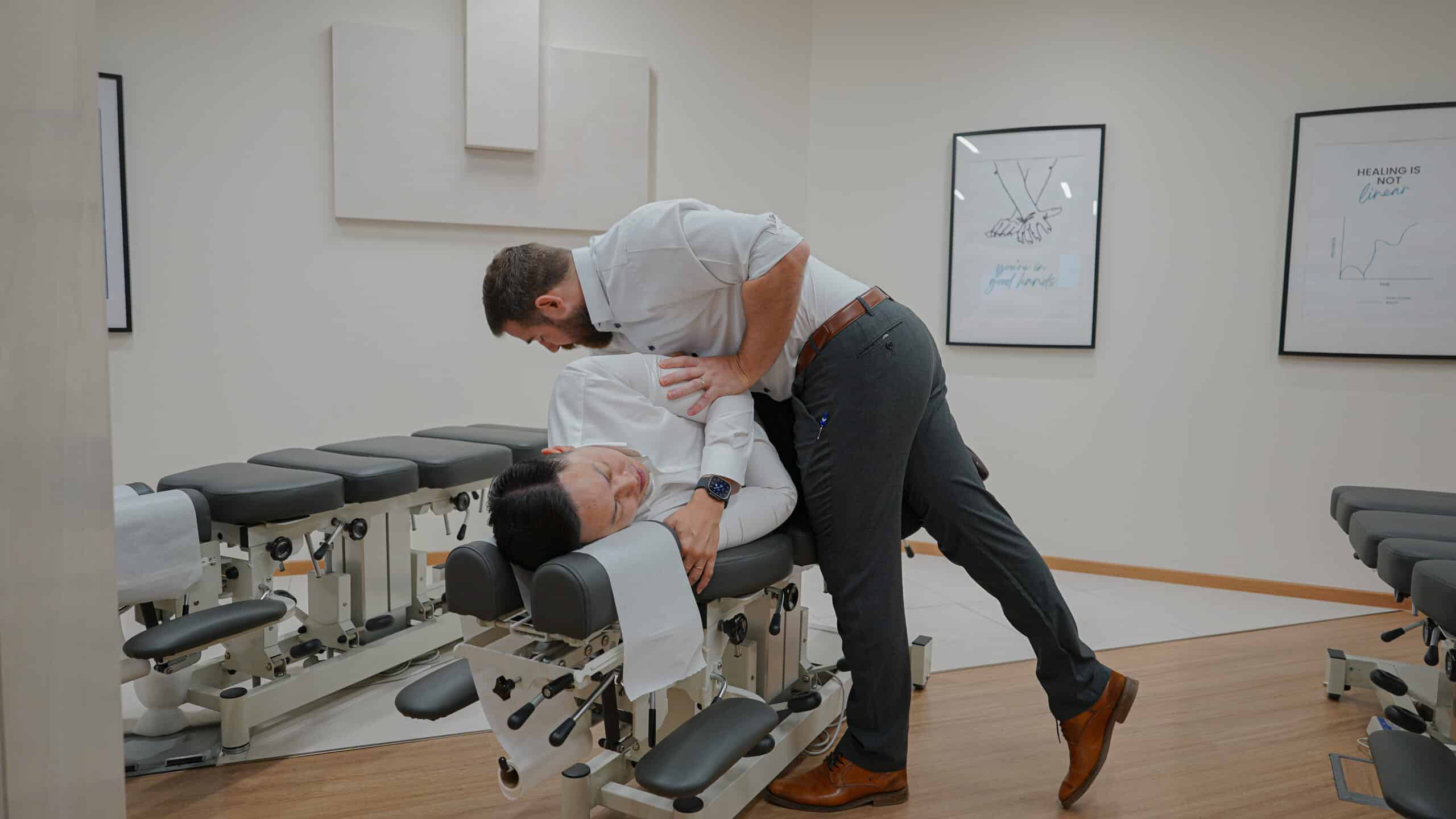
From there, care usually combines adjustments for joints that have gotten stiff, therapeutic massage for muscles that have been overworked, and corrective therapy to rebuild the strength and stability that keep the same injury from coming back next season. Most people start treatment on their very first visit.
If you’re a runner, you might also like our post on why Meridian runners benefit from a sports chiropractor, or you can read more about our sports chiropractic care.
Don’t let it take your season
We’re right off Eagle Road at Wainwright, on the Meridian and West Boise line. You don’t need a referral, and we take most insurance. Schedule your first visit or give us a call at (208) 939-0775, and let’s get you back to doing what you love.