

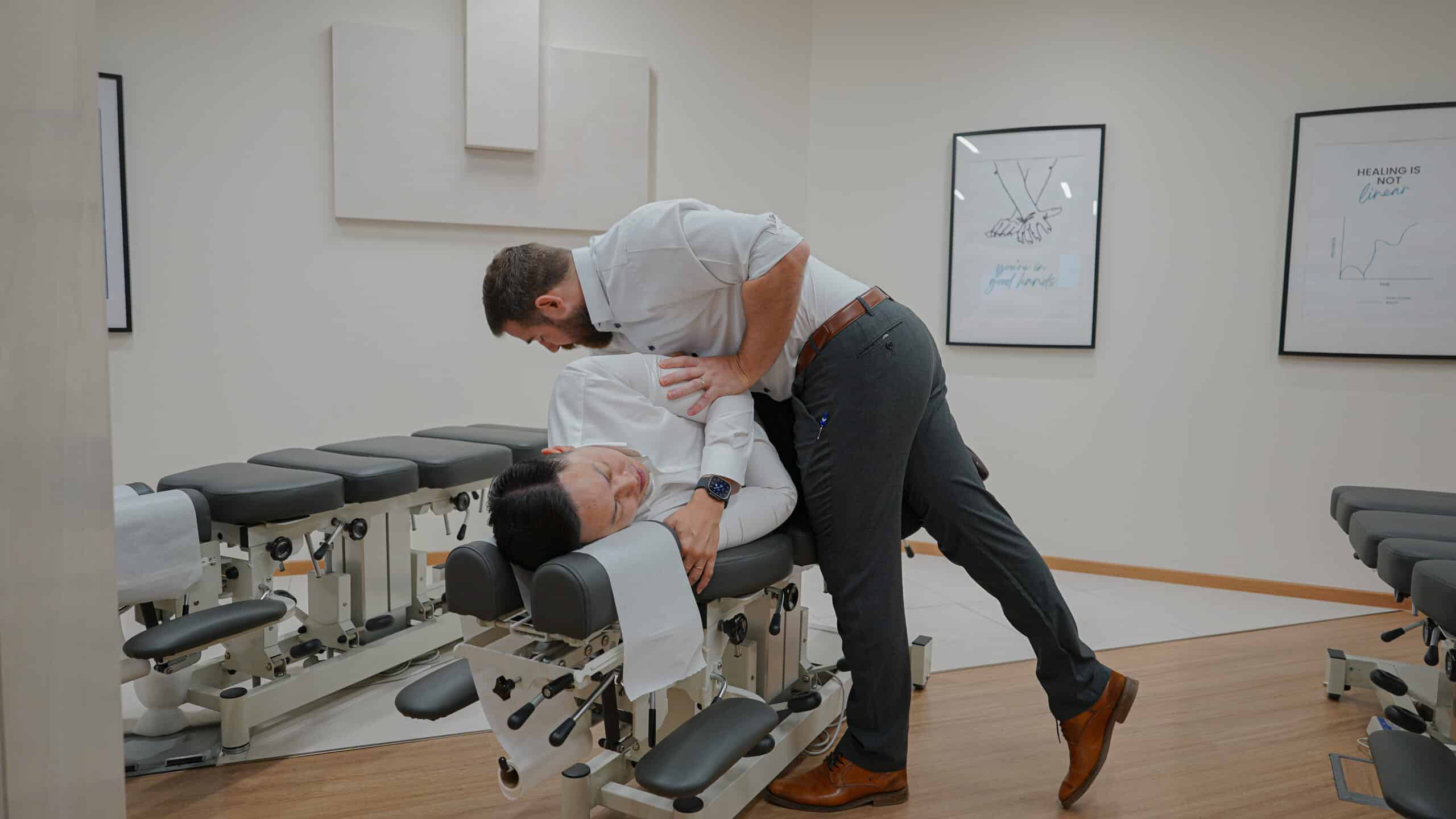
A lot of the people who find their way to upper cervical care have been dealing with something for a long time. Headaches that never fully go away. A neck that’s always tight. Feeling a little off balance, or wiped out for no clear reason. They’ve often seen several doctors, had tests come back normal, and been told to manage it.
If that sounds familiar, it might be worth looking at the very top of your neck.
Why the top of the neck matters so much
The top two bones in your spine, the atlas and the axis, sit right below your skull and surround the brainstem, the part of your nervous system that connects your brain to the rest of your body. They move more than any other part of your spine, which also makes them easier to knock out of place with a fall, a sports injury, a car accident, or even years of looking down at a phone.
When that area isn’t moving or sitting the way it should, the effects don’t always stay in the neck. That’s why the signs can be so easy to miss.
The quieter signs we see
Some are obvious, like a stiff neck that makes it hard to turn your head, or headaches that start at the base of your skull. Others are easy to brush off. Bouts of dizziness or feeling unsteady. A tight or clicking jaw. Sensitivity to bright light. Trouble sleeping. Feeling run down or foggy even when you’re getting enough rest. One shoulder that always sits higher than the other.
None of those automatically mean your upper neck is the problem. But when several of them show up together, especially after an old injury, it’s worth having it checked.
What our patients tell us
We can’t promise any particular result, and everyone responds differently. But we regularly hear upper cervical patients tell us their headaches eased up, their neck finally loosened, the dizziness settled down, or they just feel more like themselves again. For people who have been told there’s nothing else to try, that can be life-changing.
How we approach it
Upper cervical care at Highland starts with a careful exam. We use thermal imaging and X-rays to see what’s actually going on at the top of your neck before we adjust anything, so your care is based on what we find, not a guess. The adjustment itself is gentle and precise, with no twisting or cracking, which a lot of people are relieved to hear.
And if you ever have sudden, severe dizziness with slurred speech, weakness, numbness or vision changes, call 911. That needs emergency care first.
If you’ve been living with something nobody has been able to explain, we’d love to take a look. We’re right off Eagle Road at Wainwright, on the Meridian and West Boise line. You don’t need a referral, and we take most insurance. Schedule your first visit or give us a call at (208) 939-0775.